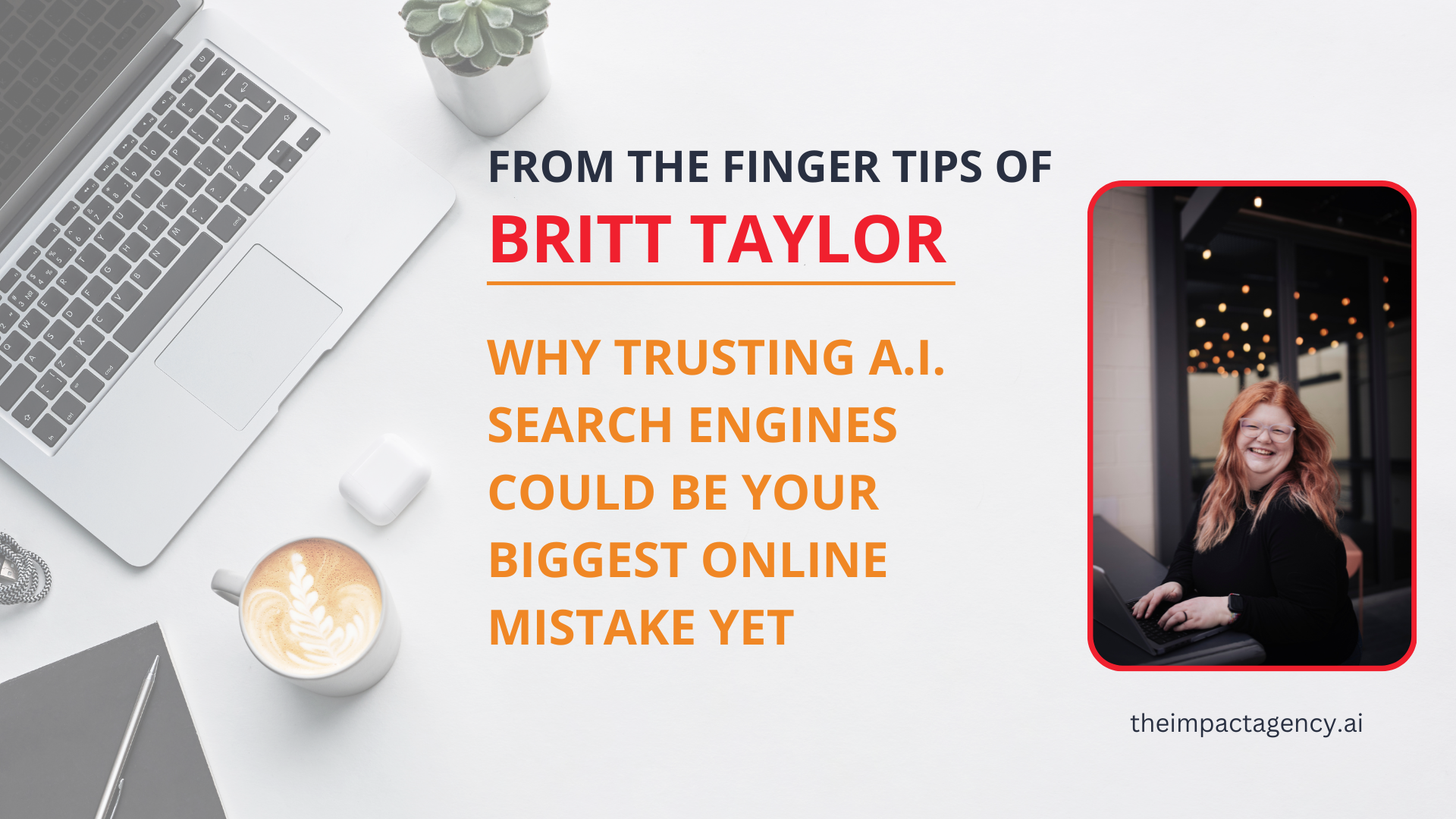
When we launched iMPACT, we did it because we genuinely believed that small business owners and property management leaders deserved better marketing partners. We wanted to eliminate the bloated agency relationships, the vague reporting, and the generic strategies that sound impressive but fail to drive real business growth.
Lately, the loudest noise in our industry revolves around Artificial Intelligence.
We are constantly told that AI can write our blogs, generate our strategies, and manage our client relationships on autopilot. But let’s be honest: when a brand goes on autopilot, human connection is the first thing to drop out.
At iMPACT, we don't run from technology. My own background in accounting and digital marketing is built on finding practical, data-driven efficiencies. But we treat technology as a supportive engine, not the driver. Our brand is built on
Strategic Trust and
Lived Empathy, and those two things cannot be coded.
If you are trying to navigate the AI wave without losing your brand's integrity, here is the exact 5-part framework we use to guide our AI usage for maximum operational iMPACT.
What is the Best Way to Use AI in Business Operations?
1. Leverage Platform-Specific AI Tools for Targeted Strategy
When you need AI assistance, look for built-in, platform-specific tools rather than a detached, one-size-fits-all chatbot. For instance, when we are auditing platform-specific strategies inside the Google ecosystem, like optimizing Google Ads, structuring Google Tag Manager conversions, or running deep-dive data analytics, we prioritize Gemini within Google Workspace.
Why platform-specific AI matters: Because it is natively integrated, Gemini is inherently better trained on the specific logic, algorithmic updates, and technical nuances of Google’s marketing platforms than non-platform alternatives. It lives directly inside the flow of work, making data analysis sharper and technical troubleshooting significantly faster.
2. Automate Routine Workflows, Protect Human Mindshare
AI is a phenomenal administrative partner, but it is a terrible executive director. We strictly use AI for lower-level operational tasks, data organization, and structural sorting. It excels at predicting spreadsheet values, formatting lists, creating initial outlines, or summarizing long internal project threads.
What it cannot do is handle true thought leadership or dictate factual strategic direction. Genuine strategy requires an understanding of real business pressure, cash flow, occupancy targets, and investor expectations. An algorithm hasn't spent years working inside a property management portfolio or navigating local market realities, but
we
have. Use AI to clear the administrative busywork so you can focus your human energy on real strategic thinking.
3. Document and Standardize Your Team Prompt Library
One of our major operational focus areas is ensuring our systems match the strength of our leadership. We believe in documentation over chaos. When you or someone on your team creates a prompt that yields an exceptionally organized, accurate, or helpful framework, don't let it sit as a one-off trick.
Capture it. Save it to a centralized team prompt library within your project management ecosystem (like Notion). Turning successful AI interactions into repeatable company workflows transforms a scattered tool into a durable, scalable operational asset.
4. Ban AI-Generated Images from Client-Facing Creative Assets
We maintain a strict, unbreakable boundary here: we do not use AI-generated images or avatars in our customer-facing creative marketing.
Marketing that works must feel intensely real, relatable, and authentic. Fake, surreal, or obviously synthesized AI graphics instantly puncture brand credibility. In a market where anyone can generate a polished but empty image, authentic, deliberate visual standards are what set a professional brand apart. If you want people to trust your real-world capability, use real-world visual standards.
5. Commit Radically to AI Transparency and Client Honesty
We owe our clients practical truth. That means being completely honest and upfront about where AI touches our workflow and where it doesn't.
We don't mask AI-assisted data processing as manual labor, and we don't pretend automated administrative drafts are bespoke strategic insights. Being transparent with the public and your clients about your technology stack doesn't weaken your position, it reinforces your honesty and deepens market trust.
Balancing Technology and Human Strategy
We aren't trying to build the biggest, most automated agency in the country. We are focused on being the steady, deeply invested marketing partner that leaders are completely relieved they found.
Technology is changing rapidly, but the foundations of business don't shift. Trust, direct stewardship, and real relationships will always drive real revenue growth. Use AI wisely to give yourself more hours in the day, but use those extra hours to show up personally for the people relying on you.